

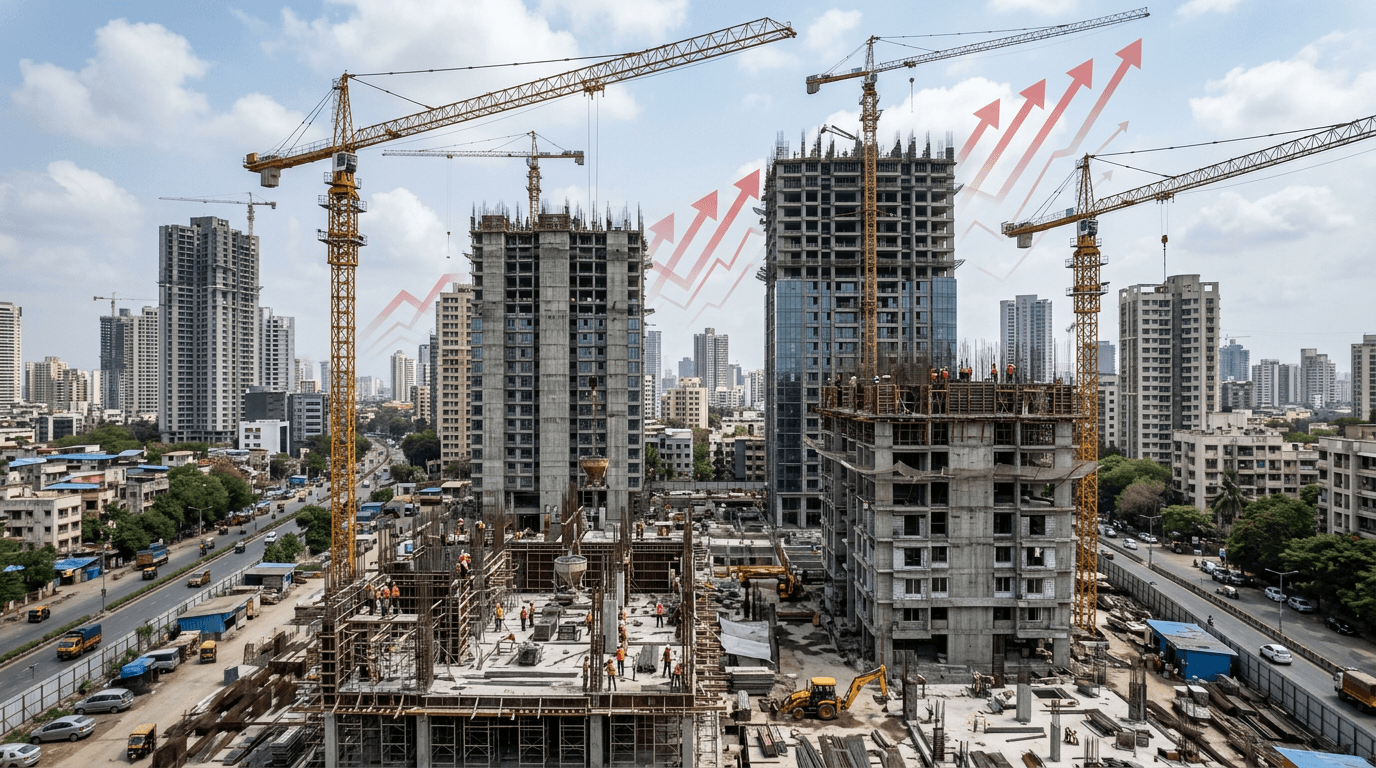
The sharp rise in construction cost across India in 2026 is not a random or isolated phenomenon. It is the result of a complex chain of global and domestic factors that are converging at the same time. To understand the construction cost increase in India 2026, one must look beyond local markets and examine the broader economic forces at play. The real estate sector sits at the intersection of commodities, labour, logistics, and policy, which means any disruption in these areas directly translates into higher costs. What makes the current situation particularly significant is that multiple pressure points have intensified simultaneously. Global conflict, rising commodity prices, supply chain disruptions, labour shortages, and inflationary pressures are all contributing to a cost environment that is becoming increasingly difficult for developers to manage. This is not just a concern for builders. It has direct implications for property buyers, investors, and the overall affordability of housing.
At the global level, geopolitical tensions, particularly in regions like West Asia, have created significant volatility in commodity markets. Construction materials such as steel and aluminium are heavily influenced by global supply and demand dynamics. When conflicts disrupt production or transportation, supply tightens and prices rise. Steel prices have surged to multi year highs due to constrained supply and sustained demand. Aluminium has also seen sharp increases, driven by energy costs and production disruptions. These materials form the backbone of construction, and their price movements have a direct impact on project costs. When the cost of core materials rises by double digit percentages, the overall cost of construction inevitably follows.
The Role of Crude Oil in Driving Construction Costs
One of the most critical yet often underestimated factors behind rising construction costs is the price of crude oil. Oil is not just a fuel. It is a foundational input that affects transportation, manufacturing, and energy consumption across industries. When crude prices rise from levels around sixty dollars per barrel to near one hundred dollars, the impact is widespread. Transportation costs increase, making it more expensive to move raw materials from factories to construction sites. Machinery such as cranes and heavy equipment becomes more costly to operate due to higher fuel expenses. Even the production of materials like cement and steel becomes more expensive because of increased energy costs.
This creates a cascading effect where every stage of the construction process becomes more expensive. Developers cannot isolate these costs because they are embedded in the entire supply chain. The result is a steady upward pressure on project budgets. This is a key driver of the construction cost increase in India 2026, and it highlights how global energy markets influence local real estate prices in ways that are not immediately visible to buyers.
Supply Chain Disruptions and Delays
Another major factor contributing to rising construction costs is the disruption of global supply chains. Shipping routes have become longer and more expensive due to geopolitical tensions and security concerns. For example, rerouting of ships to avoid conflict zones can add several days or even weeks to delivery times. This not only increases transportation costs but also creates uncertainty in project timelines. Developers rely on timely delivery of materials to maintain construction schedules. Delays can lead to idle labour, extended project durations, and additional financial costs.
The uncertainty itself becomes a cost factor. Suppliers may hesitate to commit to fixed prices due to volatility, leading to frequent price revisions. Developers are forced into a wait and watch mode, which affects planning and execution. This environment of unpredictability makes it difficult to manage budgets effectively. Even small fluctuations can accumulate into significant cost overruns over the life of a project.
Labour Shortages and Rising Wages
While material costs often receive the most attention, labour is an equally important component of construction expenses. In India, labour typically accounts for a substantial portion of total project costs. Over the past few years, labour costs have risen significantly due to a combination of factors. Migration patterns have changed, with many workers returning to their native regions during periods of economic disruption. At the same time, there is a growing shortage of skilled workers in the construction sector.
This shortage has led to higher wages as developers compete for available labour. Skilled workers command premium rates, and even unskilled labour costs have increased due to overall wage inflation. The impact of rising labour costs is particularly pronounced in projects that are already underway. Delays caused by labour shortages can extend project timelines, further increasing costs. This creates a compounding effect where both direct and indirect expenses rise simultaneously.
Domestic Factors Amplifying the Cost Pressure
While global factors play a significant role, domestic conditions in India also contribute to the construction cost increase in India 2026. Urban land prices remain high, especially in major cities. Regulatory requirements, compliance costs, and approval processes add to the financial burden on developers. Infrastructure constraints and local supply issues can further increase costs in certain regions.
Additionally, inflationary pressures within the economy affect everything from raw materials to transportation and labour. As the cost of living rises, wages increase, and operational expenses follow suit. This creates a feedback loop where rising costs in one area lead to increases in others. The construction sector, being highly interconnected, is particularly sensitive to these dynamics.
Why Affordable Housing Is Hit the Hardest
One of the most important implications of rising construction costs is its impact on different segments of the real estate market. Affordable housing is particularly vulnerable because margins in this segment are already thin. Developers operating in this space have limited flexibility to absorb cost increases. Unlike luxury projects, where higher prices can be justified by premium features and location, affordable housing relies on cost efficiency to remain viable.
When construction costs rise, developers face a difficult choice. They can either absorb the additional costs, which reduces profitability, or pass them on to buyers, which affects affordability. In many cases, a combination of both occurs. However, the ability to increase prices is constrained by market demand and regulatory considerations. This creates a situation where affordable housing projects may be delayed, scaled down, or repriced, affecting supply in the market.
The Impact on Property Buyers and Investors
For property buyers, rising construction costs translate into higher property prices over time. Even if prices do not increase immediately, the pressure builds in the system and eventually reflects in new project launches. Buyers who are planning to purchase homes may find that affordability becomes a challenge, especially in urban areas where costs are already high.
For investors, the situation presents both risks and opportunities. On one hand, rising costs can lead to higher property prices, potentially increasing the value of existing assets. On the other hand, higher costs can slow down new supply and affect demand, creating uncertainty in the market. Understanding these dynamics is essential for making informed investment decisions.
A Real World Scenario to Understand the Chain Reaction
Consider a developer planning a residential project in a major city. The project budget is based on certain assumptions about material costs, labour expenses, and timelines. Suddenly, steel prices increase by twenty percent, aluminium costs rise sharply, and fuel prices surge. At the same time, shipping delays push back the delivery of key materials. Labour becomes more expensive due to shortages, and project timelines extend.
The developer now faces a significantly higher cost structure than originally planned. To maintain viability, they may need to adjust pricing for unsold units or future phases of the project. Buyers who were expecting stable prices may now face higher costs. Investors may see changes in projected returns. This scenario illustrates how multiple factors combine to drive the construction cost increase in India 2026 and how these changes ripple through the entire real estate ecosystem.
Conclusion
The construction cost increase in India 2026 is a reflection of a broader economic reality where global and domestic forces are deeply interconnected. Rising commodity prices, driven by geopolitical tensions, have increased the cost of essential materials. Higher crude oil prices have amplified transportation and production expenses. Supply chain disruptions have introduced uncertainty and delays. Labour shortages and wage inflation have added further pressure. Domestic factors such as land costs and regulatory requirements have compounded these challenges.
For individuals, the key takeaway is to recognize that real estate prices are not determined in isolation. They are the result of complex interactions between multiple variables. Whether you are a buyer, investor, or simply observing the market, understanding these dynamics can help you make more informed decisions. As the environment continues to evolve, the ability to connect global events with local outcomes becomes increasingly important. In a world where uncertainty is constant, clarity is your most valuable asset.
FAQ Section
Construction costs are rising due to higher prices of materials like steel and aluminium, increased fuel costs, supply chain disruptions, and labour shortages.
Global events such as wars can disrupt supply chains and increase commodity prices, which directly impact construction expenses.
Steel and aluminium have seen significant price increases, along with rising costs of cement and fuel.
Higher construction costs usually lead to higher property prices, especially for new projects and unsold inventory.
Affordable housing has lower profit margins, making it harder for developers to absorb cost increases without raising prices.
It depends on market conditions, but rising costs suggest that property prices may continue to increase over time.





One Response
Very informative and easy to understand.