

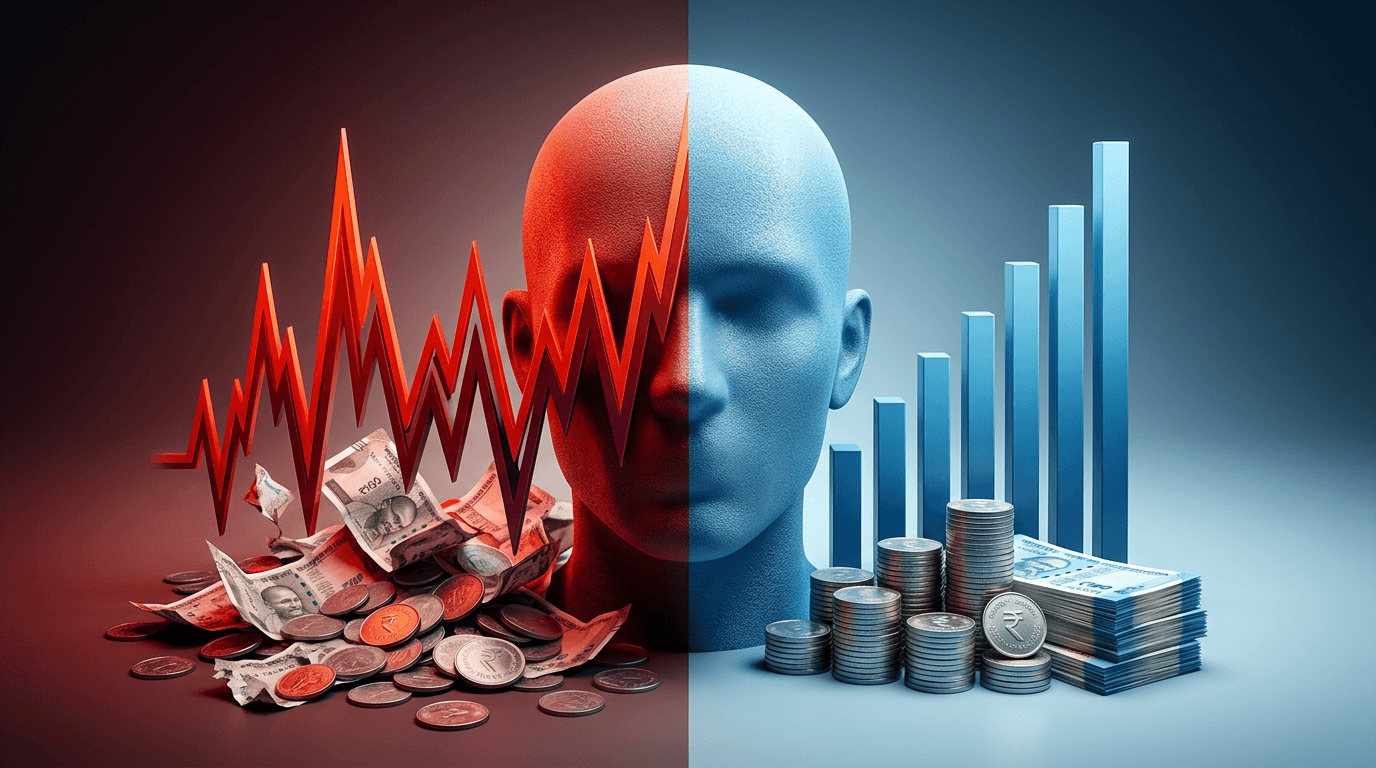
There is a quiet force that shapes most financial decisions, yet remains largely unacknowledged. It does not appear in bank statements, investment reports, or financial plans, but it influences each of them deeply. That force is emotion. Fear, greed, anxiety, excitement, and regret are not just psychological states. They are powerful drivers of financial behavior. Understanding emotional influence in personal finance is not a theoretical exercise. It is a practical necessity for anyone who wants to build and preserve wealth over time. The challenge is that emotions often feel justified in the moment. When markets rise, optimism feels rational. When markets fall, fear feels protective. However, these emotional reactions frequently lead to decisions that are misaligned with long term financial goals. Reducing emotional influence is therefore not about suppressing feelings. It is about creating a system where decisions are guided by logic, structure, and clarity rather than impulses.
The importance of this becomes clearer when we examine how financial systems operate at a broader level. Markets are not just numbers and charts. They are reflections of collective human behavior. Global events such as economic slowdowns, geopolitical tensions, or policy changes create uncertainty, which triggers emotional responses across millions of participants. These responses manifest as buying frenzies or panic selling, driving market volatility. For an individual investor in India, this volatility is not just an abstract concept. It directly affects the value of investments, the timing of decisions, and ultimately the trajectory of personal wealth. When individuals react emotionally to these fluctuations, they often amplify the impact of external events on their own finances. Instead of acting as disciplined participants, they become part of the volatility itself.
How Emotions Distort Financial Decisions
At its core, emotional influence in personal finance distorts the decision making process by shifting focus from long term outcomes to short term reactions. When an investor sees the value of their portfolio decline, the immediate emotional response is often fear. This fear creates a strong urge to act, usually by selling investments to prevent further losses. However, this action is rarely based on a careful assessment of fundamentals. It is driven by the discomfort of seeing losses on paper. Similarly, during periods of market growth, greed can push investors to take excessive risks, chasing returns without fully understanding the underlying assets. In both cases, the decision is not aligned with a structured financial plan. It is a reaction to current conditions.
The problem is compounded by cognitive biases that reinforce emotional thinking. Recency bias leads individuals to assume that recent trends will continue indefinitely. Loss aversion makes losses feel more painful than equivalent gains feel rewarding, leading to overly conservative decisions. Herd behavior encourages people to follow the actions of others, especially during uncertain times. These biases are not flaws in intelligence. They are inherent aspects of human psychology. However, when they influence financial decisions, they can lead to systematic errors that erode wealth over time.
The Cost of Emotional Decisions in Real Terms
The impact of emotional decisions is not always immediately visible, but it accumulates over time in significant ways. Consider an investor who exits the market during a downturn due to fear. While this may provide temporary relief, it also locks in losses and prevents participation in the eventual recovery. Missing even a few days of strong market performance can significantly reduce long term returns. On the other hand, an investor who enters the market aggressively during a period of high optimism may end up buying at elevated prices, leading to lower returns or even losses when the market corrects.
These patterns are not hypothetical. They are observed repeatedly across market cycles. Studies have shown that the average investor often underperforms the very funds they invest in, not because the funds perform poorly, but because of poor timing decisions driven by emotions. This gap between potential and actual returns is the hidden cost of emotional influence in personal finance. It represents missed opportunities, unnecessary losses, and a slower path to financial goals.
Why Emotional Discipline Is More Important Than Market Knowledge
A common misconception is that financial success depends primarily on knowledge of markets, products, and strategies. While knowledge is important, it is not sufficient. Many investors who understand market fundamentals still make poor decisions because they fail to manage their emotions. Emotional discipline is what allows knowledge to be applied effectively. Without it, even the best strategies can fail.
This is particularly relevant in a world where information is abundant and easily accessible. News, analysis, and opinions are constantly available, often amplifying emotional reactions rather than providing clarity. During periods of uncertainty, conflicting narratives can create confusion and anxiety. In such an environment, the ability to remain calm and focused becomes a critical advantage. It allows investors to filter noise, stick to their plans, and make decisions based on logic rather than emotion.
Building Systems That Reduce Emotional Influence
Reducing emotional influence in personal finance requires more than awareness. It requires the creation of systems that guide behavior. One of the most effective systems is a well defined financial plan that outlines goals, timelines, and strategies. When decisions are made in advance, they are less likely to be influenced by momentary emotions. For example, a systematic investment approach ensures that investments are made regularly, regardless of market conditions. This reduces the temptation to time the market and helps build discipline over time.
Another important system is diversification. By spreading investments across different asset classes and sectors, investors can reduce the impact of volatility on their overall portfolio. This makes it easier to stay invested during uncertain periods, as losses in one area may be offset by stability or gains in another. Risk management strategies, such as maintaining an emergency fund and avoiding excessive leverage, also play a crucial role in reducing emotional stress. When financial stability is maintained, there is less pressure to make reactive decisions.
The Role of Self Awareness in Financial Behavior
While systems provide structure, self awareness provides insight. Understanding your own emotional triggers is an essential part of managing financial behavior. Some individuals may be more prone to fear, while others may be more susceptible to overconfidence. Recognizing these tendencies allows you to anticipate and manage them effectively. For example, if you know that market downturns make you anxious, you can prepare by setting clear rules for how you will respond, such as not making any major decisions without reviewing your long term plan.
Self awareness also involves acknowledging that emotions cannot be eliminated entirely. They are a natural part of human experience. The goal is not to remove emotions but to prevent them from dominating decision making. This requires a balance between rational analysis and emotional understanding, where emotions are recognized but not allowed to dictate actions.
A Real World Perspective on Emotional Influence
Consider a scenario where global markets experience a sudden decline due to economic uncertainty. News headlines highlight risks, social media amplifies concerns, and investors around the world begin to sell. In this environment, it is easy to feel that selling is the safest option. However, an investor with a clear plan and disciplined approach may choose to stay invested or even increase exposure, recognizing that market declines can create opportunities for long term growth.
This difference in behavior is not about intelligence or access to information. It is about emotional control. The disciplined investor is able to separate short term noise from long term trends, while the emotional investor reacts to immediate conditions. Over time, these differences in behavior can lead to vastly different financial outcomes.
Conclusion
Reducing emotional influence in personal finance is not a luxury. It is a necessity for anyone who wants to build sustainable wealth. Emotions are powerful, and they can either support or undermine financial decisions depending on how they are managed. By understanding the role of emotions, recognizing their impact, and building systems to guide behavior, individuals can create a more stable and effective approach to managing their finances.
The journey towards financial success is not just about earning more or investing wisely. It is about making consistent, disciplined decisions over time. In a world where uncertainty is inevitable and information is overwhelming, the ability to remain calm and focused becomes a defining advantage. When you reduce emotional influence, you do not eliminate risk, but you gain control. And in finance, control is often the difference between reacting to circumstances and shaping your own financial future.
FAQ Section
It refers to how feelings like fear or greed affect financial decisions, often leading to poor investment choices.
Emotions focus on short term reactions rather than long term goals, causing impulsive actions like panic selling or over investing.
Emotions can signal risk or opportunity, but decisions should still be based on analysis and planning rather than feelings alone.
You can follow a financial plan, invest systematically, diversify your portfolio, and avoid reacting to short term market movements.
Because they fail to control emotions, leading to poor timing decisions such as buying high and selling low.
Both are important, but emotional discipline is often the key factor that determines whether knowledge is applied effectively.