

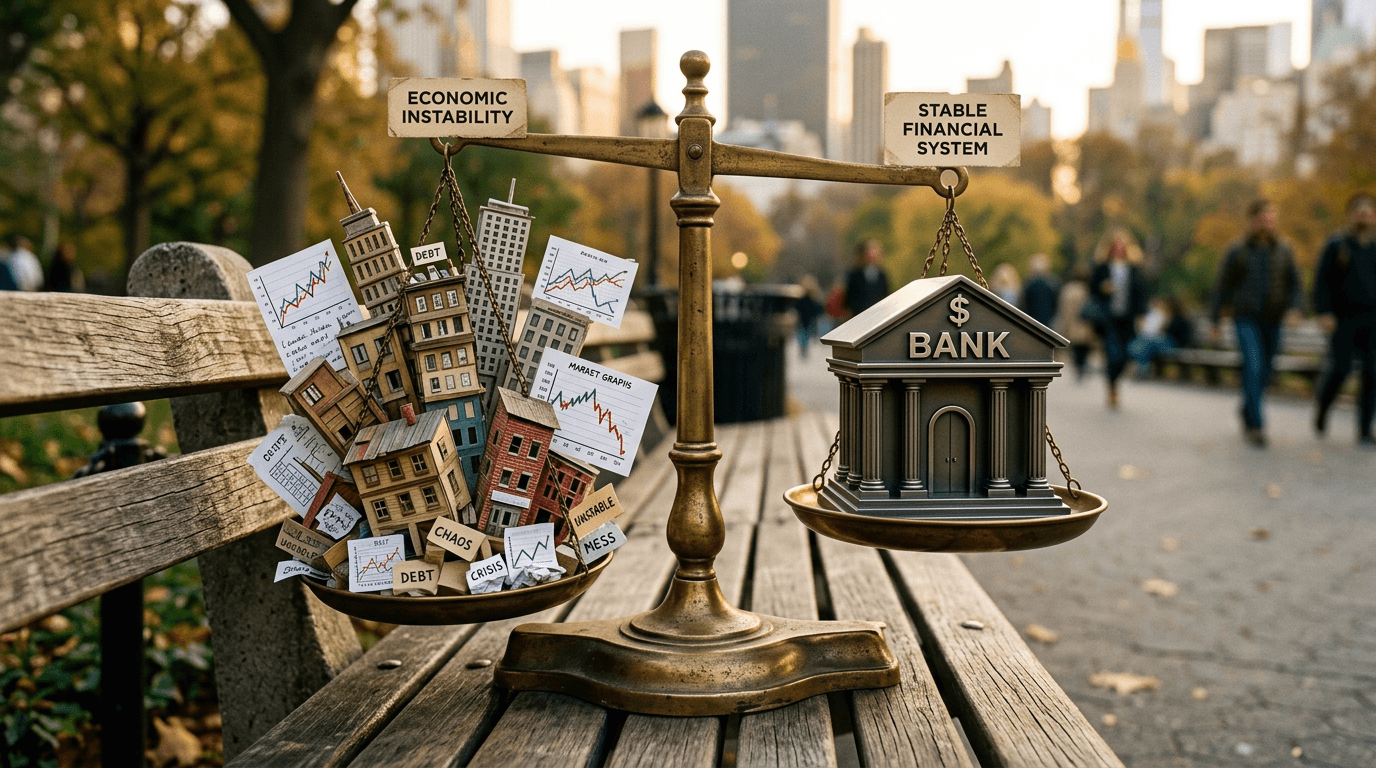
Economic cycles are not abstract academic concepts that exist only in textbooks or policy discussions but are deeply embedded forces that shape everyday financial outcomes for individuals, businesses, and institutions alike. When economies expand, contract, recover, and sometimes overheat, these phases influence income, employment, borrowing, spending, and ultimately the performance of different asset classes. Yet, one of the most misunderstood aspects of these cycles is how unevenly they impact different sectors of the economy. Businesses, especially those listed in equity markets, tend to experience sharp swings in performance during economic shifts, while banks often appear more stable and resilient, at least on the surface. This divergence is not accidental but rooted in the structural differences between how businesses operate and how banks are designed within the financial system. For investors, understanding why economic cycles impact businesses more than banks is not just an intellectual exercise but a critical insight that can influence portfolio decisions, risk management, and long term wealth creation strategies.
The Nature of Economic Cycles and Their Transmission
To understand why economic cycles impact businesses more than banks, it is important to first recognise how these cycles originate and how their effects are transmitted through the economy. Economic cycles are driven by a combination of factors that include changes in consumer demand, shifts in interest rates, government policy decisions, global trade dynamics, and unexpected shocks such as geopolitical tensions or supply disruptions. When demand rises, businesses expand production, hire more employees, and invest in capacity, creating a virtuous cycle of growth. Conversely, when demand weakens, the same businesses face declining revenues, excess capacity, and pressure on margins, which can lead to cost cutting, layoffs, and reduced investment. This direct exposure to demand fluctuations makes businesses inherently sensitive to economic cycles, as their revenues and profits are closely tied to how much consumers and other businesses are willing to spend.
Banks, on the other hand, operate within a fundamentally different framework where their core function is to act as intermediaries between savers and borrowers. Their primary source of income comes from the spread between the interest they pay on deposits and the interest they earn on loans, which is influenced by central bank policies and overall liquidity conditions. While banks are not immune to economic cycles, their exposure is indirect and often moderated by regulatory structures and risk management practices. For instance, even during periods of economic slowdown, banks continue to earn interest income from existing loans, and their diversified loan portfolios help distribute risk across multiple sectors and borrowers. This structural difference creates a situation where businesses experience immediate and visible impacts from economic changes, while banks absorb these effects more gradually.
Why Business Earnings Are Highly Sensitive
The reason economic cycles impact businesses more than banks becomes clearer when we examine the nature of business earnings and how they respond to changes in the economic environment. Businesses operate in competitive markets where pricing power, cost structures, and demand elasticity play critical roles in determining profitability. During an economic expansion, rising demand allows businesses to increase prices, improve utilisation of assets, and achieve economies of scale, leading to higher profit margins. However, this same operating leverage works in reverse during a downturn, where even a modest decline in revenue can result in a disproportionately large decline in profits. Fixed costs such as salaries, rent, and interest payments do not adjust as quickly as revenues, which means that businesses can quickly move from profitability to losses when demand weakens.
This sensitivity is further amplified in sectors that are cyclical in nature, such as real estate, automobiles, and capital goods, where demand is closely linked to consumer confidence and investment activity. For example, a slowdown in economic growth can lead to postponement of large purchases such as homes or vehicles, directly impacting the revenues of companies in these sectors. In contrast, banks do not depend on selling products in the same way but rather on facilitating financial transactions and managing credit. While a slowdown can lead to an increase in loan defaults and lower credit growth, these effects are often cushioned by provisions, capital buffers, and regulatory oversight, which are designed to maintain stability in the financial system.
The Role of Regulation and Risk Distribution
One of the key reasons why banks appear more stable during economic cycles is the role of regulation and the way risk is distributed within the banking system. Banks operate under strict regulatory frameworks that require them to maintain adequate capital, manage liquidity, and assess the creditworthiness of borrowers. These regulations are not merely compliance requirements but are essential mechanisms that ensure the stability of the financial system. By mandating capital adequacy ratios and provisioning norms, regulators ensure that banks have sufficient buffers to absorb losses during periods of economic stress.
In addition to regulation, banks benefit from diversification across borrowers, industries, and geographies, which reduces the impact of any single default or sectoral downturn. For instance, a bank that has exposure to housing loans, business loans, and personal credit is less vulnerable to a slowdown in any one segment compared to a business that relies heavily on a single product or market. This diversification acts as a natural stabiliser, allowing banks to manage risk more effectively than individual businesses. However, it is important to note that this does not make banks immune to economic cycles, as severe downturns can still lead to systemic stress, but it does explain why their performance tends to be less volatile compared to businesses.
Market Perception and Investor Behaviour
Another dimension that explains why economic cycles impact businesses more than banks is the way markets perceive and react to information. Equity markets are forward looking and tend to price in expectations of future earnings rather than current performance. This means that even small changes in economic outlook can lead to significant movements in stock prices, as investors reassess growth prospects and risk levels. Businesses, especially those with high growth expectations, are particularly vulnerable to such shifts in sentiment, as their valuations are often based on future earnings potential.
Banks, while also listed entities, are often valued based on more stable metrics such as book value and return on assets, which tend to fluctuate less dramatically than earnings of cyclical businesses. This difference in valuation frameworks contributes to the perception that banks are more stable investments during uncertain times. However, this stability is relative and should not be interpreted as an absence of risk, as banks can also face challenges during prolonged economic stress, particularly if asset quality deteriorates significantly.
What This Means for Your Investment Strategy
Understanding why economic cycles impact businesses more than banks has direct implications for how individuals should approach investing and portfolio construction. A common mistake among investors is to treat all equity investments as homogeneous, without recognising the varying degrees of sensitivity to economic cycles across sectors. By appreciating these differences, investors can make more informed decisions about asset allocation, sector exposure, and risk management.
For instance, during periods of economic expansion, investing in cyclical businesses may offer higher returns as these companies benefit from rising demand and improved profitability. However, as the economic cycle matures and risks of slowdown increase, shifting towards more stable sectors, including banking and financial services, can help reduce volatility and preserve capital. This does not imply that one should attempt to time the market precisely, which is inherently difficult, but rather that a balanced and diversified approach that accounts for economic conditions can enhance long term outcomes.
Another practical implication is the importance of aligning investment choices with individual risk tolerance and financial goals. Younger investors with longer time horizons may be better positioned to absorb short term volatility in business earnings, while those closer to financial goals may prioritise stability and capital preservation. In this context, understanding sectoral dynamics becomes a tool for managing risk rather than merely chasing returns.
The Broader Perspective on Wealth Creation
At a broader level, the relationship between economic cycles, businesses, and banks highlights the importance of viewing investments within the context of the overall economic environment rather than in isolation. Wealth creation is not just about selecting the right assets but also about understanding how those assets behave under different conditions and how they interact with each other within a portfolio. The fact that economic cycles impact businesses more than banks is a reminder that risk is not uniform and that diversification is not just about holding multiple assets but about holding assets that respond differently to the same set of economic forces.
For example, a well constructed portfolio may include a mix of equities, banking stocks, fixed income instruments, and other assets, each playing a specific role in balancing risk and return. During periods of growth, equities may drive returns, while during periods of uncertainty, more stable assets can provide a cushion. This dynamic approach to investing requires continuous learning and adaptation, as economic conditions evolve and new opportunities and risks emerge.
Conclusion
The reality that economic cycles impact businesses more than banks is rooted in fundamental differences in how these entities operate, generate income, and manage risk. Businesses are directly exposed to fluctuations in demand and market conditions, making their earnings and valuations inherently volatile, while banks benefit from diversification, regulation, and a more stable income structure that cushions them against immediate shocks. For investors, this understanding is not merely theoretical but a practical framework for making better decisions about where to allocate capital and how to manage risk across different phases of the economic cycle. The key is not to view one sector as inherently superior to another but to recognise their distinct characteristics and use this knowledge to build a balanced and resilient portfolio. As economic cycles continue to shape financial outcomes, those who understand these dynamics will be better equipped to navigate uncertainty and create sustainable wealth over time.
FAQ Section
Businesses are directly dependent on consumer demand and market conditions, which makes their revenues and profits highly sensitive to economic changes, while banks operate through lending and benefit from diversification and regulation.
Banks are relatively more stable but not risk free, as severe downturns can lead to loan defaults and stress in the financial system.
Investors should diversify their portfolios and adjust exposure to different sectors based on economic conditions and their own risk tolerance.
Stock markets may decline during slowdowns, but they also anticipate future recovery, which means movements are often based on expectations rather than current conditions.
It depends on the economic phase and individual investment goals, as both sectors have different risk and return characteristics.